
35. Python Essentials: Generators in Python Functions
Understanding Generators in Python Functions
Generators are a powerful feature in Python that allow you to create iterators in a more efficient way. They help manage memory usage and streamline data processing, especially when dealing with large datasets. In this blog post, we will dive into what generators are, how they work, and how you can use them effectively in your Python functions.
What Are Generators?
Generators are a special type of iterable that allow you to iterate through data without having to store the entire dataset in memory. Unlike lists, which store all their elements, generators compute their values on the fly, yielding them one at a time and only when requested. This makes them particularly useful for processing large data streams or when you want to create infinite sequences.
Creating Generators
You can create a generator in Python in two primary ways: using a generator function or a generator expression.
1. Generator Functions
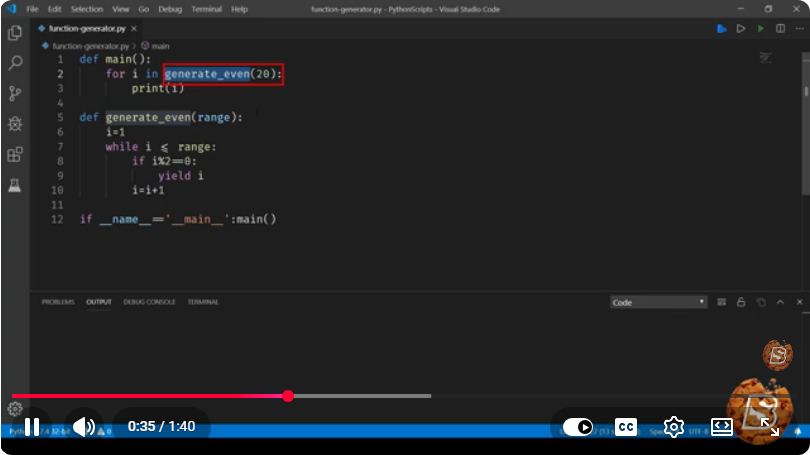
A generator function is defined like a normal function but uses the yield statement instead of return. When called, the function doesn’t execute its body immediately; instead, it returns a generator object that can be iterated over.
Example:
def count_up_to(max):
    count = 1
    while count <= max:
        yield count
        count += 1
In the count_up_to generator function, we use yield to produce values one at a time. The function maintains its state between calls, allowing it to continue from where it left off.
2. Generator Expressions
Generator expressions provide a more concise way to create generators using a syntax similar to list comprehensions. They use parentheses instead of square brackets.
Example:
squares = (x*x for x in range(10))
Here, squares is a generator that will yield the square of numbers from 0 to 9 when iterated over.
Using Generators
To use a generator, you can iterate through it using a for loop or by calling the next() function to fetch values one at a time.
Example of Iterating:
for number in count_up_to(5):
    print(number)
This will output:
1
2
3
4
5
Using next()
You can also manually retrieve values from a generator using the next() function:
gen = count_up_to(3)

print(next(gen))  # Output: 1
print(next(gen))  # Output: 2
print(next(gen))  # Output: 3
# print(next(gen))  # This will raise StopIteration
Advantages of Using Generators
- Memory Efficiency: Generators only compute values as needed, which is particularly useful for large datasets.
- Cleaner Code: They can make your code more readable and concise.
- Infinite Sequences: You can create generators that represent infinite sequences, as they don't compute all values at once.
Conclusion
Generators in Python are a powerful tool for creating efficient, memory-friendly iterators. Whether you choose to implement them with generator functions or expressions, they can help you streamline data processing and enhance the performance of your applications. Embrace generators in your next Python project to handle data more effectively!
For more in-depth learning, consider exploring the official Python documentation or experimenting with different generator patterns in your projects. Happy coding!
Connect with SkillBakery Studios
Explore more tutorials, tools, and resources:
Posted by SkillBakery Studios


 Hello, my name is Jack Sparrow. I'm a 50 year old self-employed Pirate from the Caribbean.
No comments:
Post a Comment