
6-Taking GPT-5 for a Ride: How Prompt Engineering Shapes AI Responses
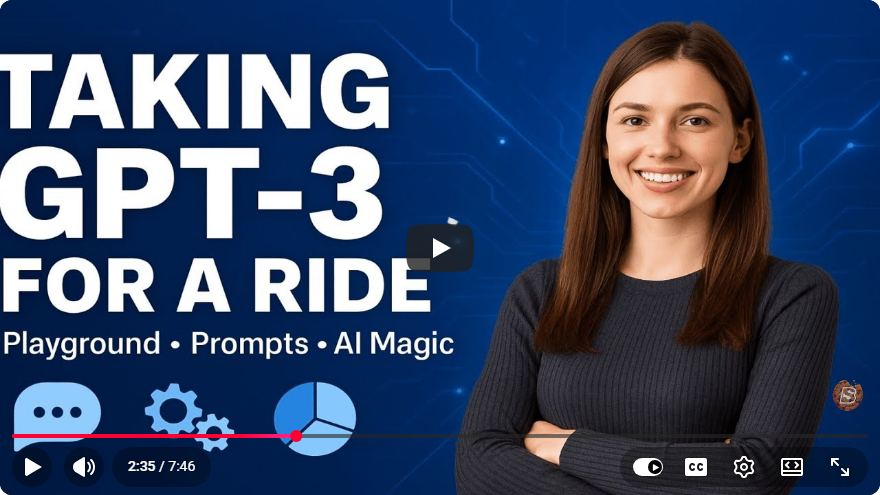
Taking GPT-5 for a Ride: How Prompt Engineering Shapes AI Responses
In recent years, artificial intelligence (AI) has made tremendous strides, especially in the field of natural language processing. Among the most notable advancements is OpenAI's GPT-5—a powerful language model that can generate human-like text. In this blog post, we will explore how to effectively use GPT-5 through prompt engineering, which is crucial for shaping the AI's responses.
Understanding GPT-5
Before diving into prompt engineering, let's briefly discuss what GPT-5 is and how it operates. Built upon the transformer architecture, GPT-5 leverages deep learning to understand and generate human-like text based on the input it receives. It has been trained on diverse datasets, which enables it to respond intelligently across various topics.
Key Features of GPT-5
- Advanced Understanding: GPT-5 has improved context comprehension compared to its predecessors, allowing for more coherent and contextually relevant responses.
- Versatile Applications: From writing assistance to coding help, GPT-5 can be utilized in numerous domains.
- Interactive Capabilities: Users can engage with GPT-5 in real-time through platforms like the OpenAI Playground.
Getting Started with OpenAI Playground
To explore GPT-5, the OpenAI Playground is an ideal environment. Follow these steps to get started:
- Access the OpenAI Playground: Visit the OpenAI website and navigate to the Playground section.
- Select GPT-5: Choose the GPT-5 model from the list of available models.
- Familiarize Yourself with the Interface: The Playground provides options to adjust settings like temperature, max tokens, and top-p, which influence the model’s response characteristics.
Important Settings
- Temperature: Controls randomness in responses. A lower temperature (e.g., 0.2) yields more predictable results, while a higher temperature (e.g., 0.8) generates more creative outputs.
- Max Tokens: Limits the length of the generated response. Setting this parameter helps manage the output size.
- Top-p: This parameter determines the model's focus on the most likely words during generation. A value of 0.9 allows for a balance between coherence and creativity.
The Art of Prompt Engineering
Prompt engineering is the process of crafting inputs to guide GPT-5 toward producing the desired output. Here are some effective strategies for prompt engineering:
1. Use Clear and Specific Prompts
The clarity of your prompt significantly impacts the quality of the response. Instead of vague instructions, be explicit about what you want.
Example: Instead of asking:
Tell me about AI.
Try:
Explain the differences between supervised and unsupervised learning in AI, providing examples for each.
2. Provide Context
Incorporating context can help the model generate more relevant responses. You can include background information or specific scenarios to frame your query.
Example:
As a software engineer, describe the advantages of using Python for machine learning projects.
3. Set a Role for GPT-5
Assigning a role to GPT-5 can guide its tone and style. This method is particularly useful when you need the model to adopt a specific voice or perspective.
Example:
You are an expert marketing consultant. Provide strategies for a startup to improve its online presence.
4. Ask for Structured Responses
If you require a list, table, or any specific format, mention it in your prompt.
Example:
List five key benefits of using renewable energy sources in bullet points.
Experimentation and Iteration
The beauty of using GPT-5 lies in its capacity for experimentation. Don’t hesitate to iterate on your prompts. Minor adjustments can lead to vastly different outcomes.
Example of Iteration:
Start with a basic prompt:
What are the benefits of meditation?
If the response isn’t satisfactory, refine it:
List the top five scientific benefits of meditation, focusing on mental health and stress reduction.
Conclusion
Prompt engineering is essential for maximizing the potential of GPT-5. By crafting clear, contextual, and structured prompts, you can significantly enhance the quality of the AI's responses. As you experiment with the OpenAI Playground, remember that the journey of learning how to interact with AI is just as important as the responses you receive.
So go ahead, take GPT-5 for a ride, and see how your prompts can shape the conversation! Happy experimenting!
For more insights and tutorials on using AI effectively, stay tuned for our upcoming posts.
Connect with SkillBakery Studios
Explore more tutorials, tools, and resources:
Posted by SkillBakery Studios


 Hello, my name is Jack Sparrow. I'm a 50 year old self-employed Pirate from the Caribbean.
No comments:
Post a Comment