
Data Structures in C# - Exploring Generic Classes
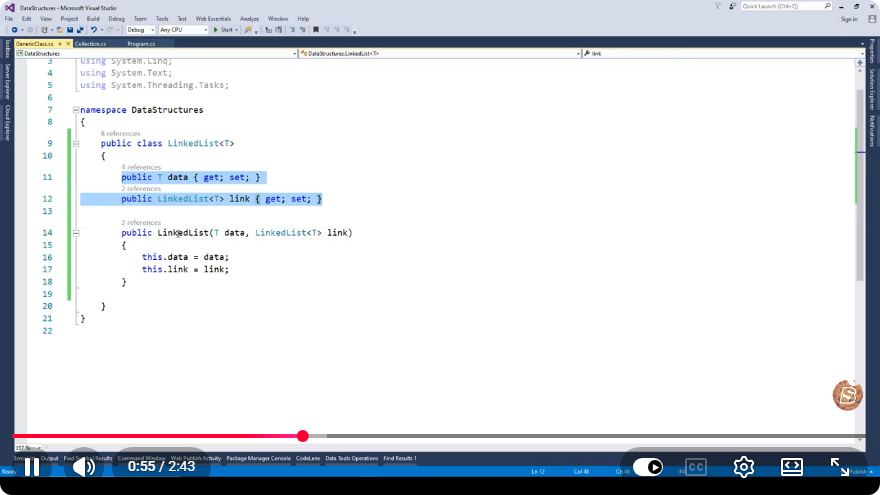
Exploring Generic Classes in C#: A Quick Overview
In the world of programming, data structures play a crucial role in how we manage and organize data. In this blog post, we will delve into generic classes in C#, as explored in the YouTube video titled "Data Structures in C# - Exploring Generic Classes." Generic classes offer a powerful way to create flexible and reusable code. Let's dive into the essentials!
What are Generic Classes?
Generic classes are classes that can operate on types specified by the user at runtime. They provide a way to define a class with a placeholder for the data type, allowing you to create classes, interfaces, and methods with a variety of types without sacrificing type safety.
Benefits of Using Generic Classes
- Type Safety: Generics enforce compile-time type checking, reducing runtime errors and increasing code reliability.
- Code Reusability: You can reuse the same class for different data types without rewriting code.
- Performance: Generics can improve performance by reducing boxing and unboxing operations, which happen with non-generic collections.
Defining a Generic Class
In C#, you define a generic class by using angle brackets <> to specify the type parameter. Here's a simple example of a generic class that represents a pair of values:
public class Pair<T1, T2>
{
    public T1 First { get; set; }
    public T2 Second { get; set; }

    public Pair(T1 first, T2 second)
    {
        First = first;
        Second = second;
    }
}
Explanation of the Code
Pair<T1, T2>: This is the definition of a generic class namedPair, which takes two type parameters:T1andT2.- Properties: The class contains two properties,
FirstandSecond, which hold values of typesT1andT2, respectively. - Constructor: The constructor initializes the properties with the provided values.
Using Generic Classes
Once you have defined a generic class, you can create instances of it using different types. Here’s how you can use the Pair class:
class Program
{
    static void Main(string[] args)
    {
        // Creating a Pair of int and string
        Pair<int, string> intStringPair = new Pair<int, string>(1, "One");

        // Creating a Pair of string and double
        Pair<string, double> stringDoublePair = new Pair<string, double>("Pi", 3.14);

        Console.WriteLine($"First: {intStringPair.First}, Second: {intStringPair.Second}");
        Console.WriteLine($"First: {stringDoublePair.First}, Second: {stringDoublePair.Second}");
    }
}
Explanation of the Usage
- Creating Instances: You can create instances of
Pairusing various types, likeintandstring, orstringanddouble. - Output: When you run the program, it will display the values stored in the pairs.
Conclusion
Generic classes in C# are a powerful feature that enhances code flexibility, type safety, and performance. By understanding how to define and use them, you can write cleaner and more efficient code tailored to various data types.
As you continue to explore data structures in C#, consider how generics can simplify your coding tasks and improve overall application architecture. For a more in-depth understanding, check out the YouTube video linked above, which provides additional insights into generic classes and their applications in data structures.
Happy coding!
Connect with SkillBakery Studios
Explore more tutorials, tools, and resources:
Posted by SkillBakery Studios


 Hello, my name is Jack Sparrow. I'm a 50 year old self-employed Pirate from the Caribbean.
No comments:
Post a Comment