
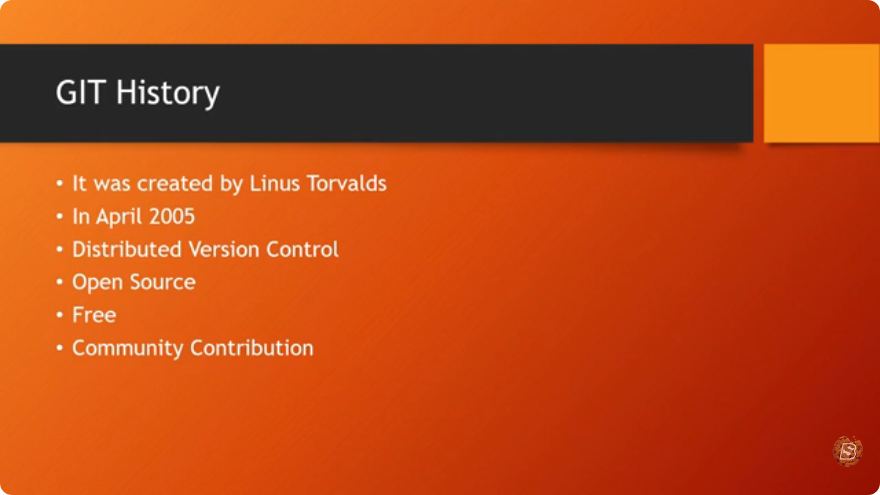
GIT - History 26 seconds
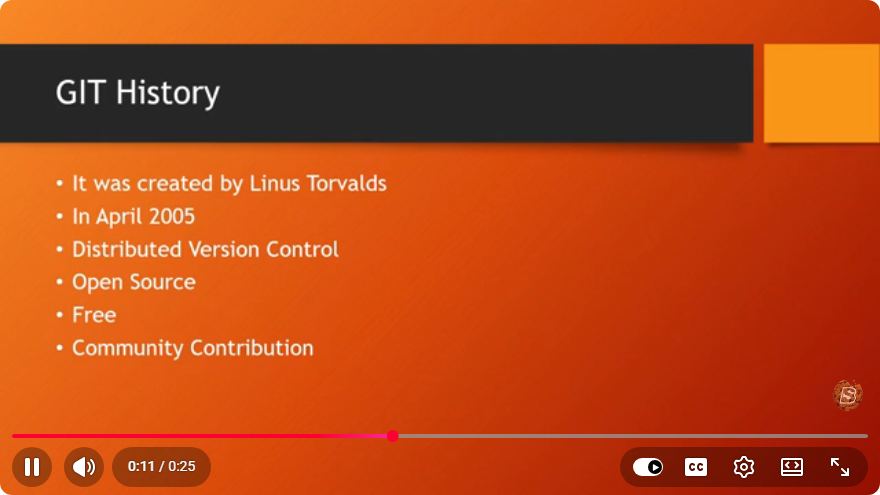
Understanding Git: A Brief History in 26 Seconds
Git is one of the most widely used version control systems in the software development world. It allows developers to track changes in their code, collaborate with others, and maintain a history of their work. In this post, we will explore the brief yet rich history of Git, including its origins, key features, and its impact on modern software development.
The Origins of Git
Git was created by Linus Torvalds in 2005. The initial motivation behind its development was to improve upon the existing version control systems used in the Linux kernel development process. Prior to Git, the Linux kernel was managed using a proprietary system called BitKeeper. However, when BitKeeper's licensing changed, Torvalds needed a new tool that would be open-source and allow for distributed version control.
Key Features of Git
Git introduced several innovative features that have made it a favorite among developers:
Distributed Version Control: Unlike centralized version control systems, Git allows each developer to have a complete copy of the repository, including its history. This means that work can continue offline and changes can be merged later.
Branching and Merging: Git makes it easy to create branches, allowing developers to work on features or fixes in isolation. Once the work is complete, it can be merged back into the main branch, ensuring a clean and organized project history.
Staging Area: Git includes a staging area (or index), which allows developers to selectively add changes to the next commit. This feature enables greater control over what is included in the project history.
Speed and Efficiency: Git is designed to be fast. Most operations are performed locally, which means that there is minimal lag when working with repositories, even those with a long history.
The Evolution of Git
Since its inception, Git has grown significantly in terms of adoption and functionality. Here are some milestones in its evolution:
2005: Launch of Git
Linus Torvalds released the first version of Git, which aimed to address the needs of the Linux kernel development community.
2008: Git 1.5
This version introduced several enhancements, including support for the "git status" command and improved handling of branches.
2010: GitHub
The launch of GitHub, a web-based platform for hosting Git repositories, revolutionized collaboration in software development. It provided a user-friendly interface for Git and introduced features like pull requests, which simplified code review and collaboration.
2013: Git 1.8
With this release, Git introduced the "rebase" command, allowing developers to integrate changes from one branch to another more seamlessly. It also introduced improvements in performance and usability.
The Impact of Git on Software Development
Git has had a profound impact on how software is developed today. Its distributed nature has fostered collaboration among developers globally, making open-source projects more accessible than ever. Additionally, tools like GitHub, GitLab, and Bitbucket have created communities around Git, leading to better practices, code sharing, and collective learning.
Conclusion
In just 26 seconds, one can understand that Git is not just a version control system; it is a cornerstone of modern software development. Its history reflects the need for open-source solutions and collaboration among developers. As we look to the future, Git will undoubtedly continue to evolve and shape the way we create software.
For those interested in diving deeper into Git, consider exploring the official Git documentation or engaging with communities on platforms like GitHub. Happy coding!
Connect with SkillBakery Studios
Explore more tutorials, tools, and resources:
Posted by SkillBakery Studios


 Hello, my name is Jack Sparrow. I'm a 50 year old self-employed Pirate from the Caribbean.
No comments:
Post a Comment