
Ruby on Rails - Why we should use Ruby
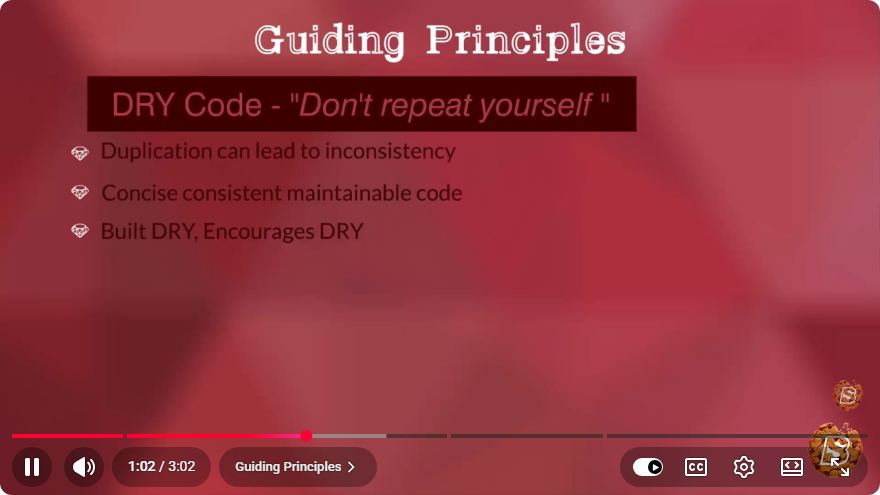
Why You Should Use Ruby on Rails: A Quick Overview
Ruby on Rails, often referred to as Rails, is an open-source web application framework that has gained immense popularity since its inception. If you're considering building web applications, it's essential to understand the reasons why Ruby on Rails stands out. In this blog post, we'll explore the key benefits of using Ruby on Rails, as highlighted in the YouTube video titled "Ruby on Rails - Why we should use Ruby."
What is Ruby on Rails?
Ruby on Rails is a full-stack web application framework written in the Ruby programming language. It follows the model-view-controller (MVC) architectural pattern, which separates the application into three interconnected components:
- Model: Represents the data layer and business logic of the application.
- View: Handles the presentation layer and user interface.
- Controller: Manages the interaction between the model and the view.
This separation allows for better organization and maintainability of code, making it easier to develop and scale applications.
Key Benefits of Using Ruby on Rails
1. Rapid Development
One of the most significant advantages of Ruby on Rails is its emphasis on rapid development. The framework offers a variety of built-in tools, libraries, and conventions that allow developers to create applications quickly. Its convention over configuration philosophy means that developers can focus on writing code instead of spending time on configuration.
For instance, Rails provides scaffolding, which can automatically create a basic structure for your application, including models, views, and controllers, allowing you to get started in no time.
rails generate scaffold Post title:string body:text
The command above generates a complete CRUD (Create, Read, Update, Delete) interface for a Post model, significantly speeding up development.
2. Strong Community Support
Ruby on Rails has a vibrant and active community. This means that developers can easily find support, resources, and libraries (known as gems) to extend the functionality of their applications. The community regularly contributes to the framework's development, ensuring it stays up-to-date with the latest trends and technologies.
3. Flexible and Scalable
Rails is designed to be flexible and scalable. Whether you are building a simple blog or a complex e-commerce platform, Rails can accommodate your needs. Its modular design allows developers to add or remove features as necessary, making it easier to scale applications as they grow.
4. Convention Over Configuration
As mentioned earlier, Rails follows the convention over configuration principle. This means that it comes with sensible defaults, which reduces the number of decisions developers need to make. By adhering to these conventions, developers can work more efficiently and maintain consistency throughout the codebase.
5. Security Features
Security is a critical aspect of web development, and Rails comes with built-in security features that help protect applications from common threats such as SQL injection and cross-site scripting (XSS). The framework encourages best practices and provides security mechanisms to help developers build safe applications.
Conclusion
Ruby on Rails is a powerful framework that offers numerous benefits for web application development. Its rapid development capabilities, strong community support, flexibility, adherence to conventions, and built-in security features make it an excellent choice for both new and experienced developers. If you're looking to build a web application efficiently and effectively, Ruby on Rails is definitely worth considering.
For more information and a deeper dive into the features of Ruby on Rails, check out the original video: Ruby on Rails - Why we should use Ruby. Whether you are a developer looking to expand your toolkit or a business owner seeking the best framework for your next project, Ruby on Rails has a lot to offer. Happy coding!
Connect with SkillBakery Studios
Explore more tutorials, tools, and resources:
Posted by SkillBakery Studios


 Hello, my name is Jack Sparrow. I'm a 50 year old self-employed Pirate from the Caribbean.
No comments:
Post a Comment