
Web Development Roadmap 2026 (Day 6): Which Frameworks to Learn First (And Which to Skip)
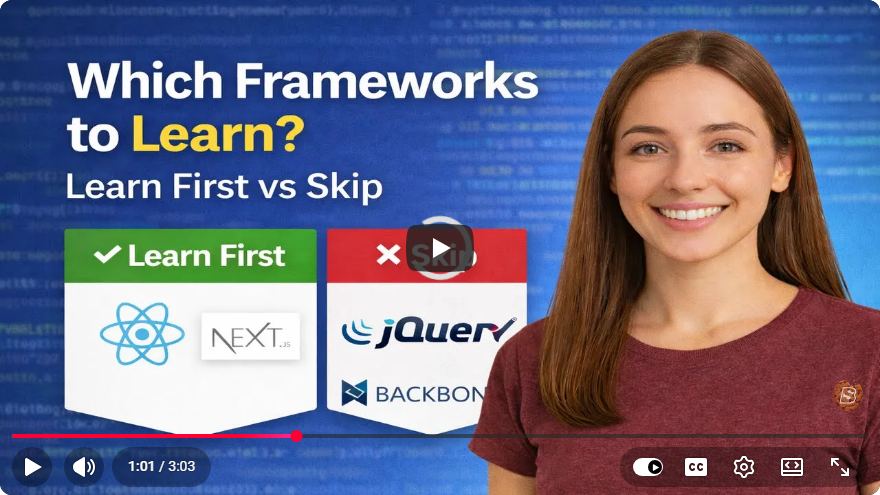
Web Development Roadmap 2026: Choosing the Right Frameworks for Beginners
As the digital landscape continues to evolve, web development remains a critical skill in the tech industry. With countless frameworks available today, it can be overwhelming for beginners to navigate their options. In this post, we will summarize the key points from the YouTube video "Web Development Roadmap 2026 (Day 6): Which Frameworks to Learn First (And Which to Skip)" and provide a structured guide on how to approach learning frameworks effectively.
The Importance of Frameworks in Web Development
Frameworks are essential tools in web development that streamline the coding process, enhance productivity, and provide robust structures for building web applications. They come with pre-written code libraries, templates, and best practices that can significantly reduce the time and effort required to develop a website.
Why It Matters
- Efficiency: Frameworks help developers write code faster and more efficiently.
- Maintainability: They provide a consistent structure that makes it easier to manage and maintain code.
- Community Support: Popular frameworks have large communities, which means plenty of resources, documentation, and support are available.
Which Frameworks Should Beginners Learn First?
1. React
Overview: Developed by Facebook, React is a popular JavaScript library for building user interfaces, particularly single-page applications (SPAs).
Why Learn React?
- Component-Based Architecture: Encourages reusable code, making it easier to manage complex applications.
- Strong Community: Extensive resources, tutorials, and community support.
- Job Market: High demand in the job market, making it a valuable skill.
Getting Started:
npx create-react-app my-app
cd my-app
npm start
2. Vue.js
Overview: Vue.js is a progressive JavaScript framework that is easy to integrate with other projects and libraries.
Why Learn Vue.js?
- Simplicity: It has a gentle learning curve, making it great for beginners.
- Flexibility: Can be used for both small and large applications.
- Documentation: Excellent documentation that helps new developers get up to speed quickly.
Getting Started:
npm install vue
3. Angular
Overview: Angular is a platform developed by Google for building mobile and desktop web applications.
Why Learn Angular?
- Full-Featured: Comes with everything you need for a complete framework.
- TypeScript: Uses TypeScript, which is beneficial for larger applications.
- Enterprise-Level Applications: Ideal for building large-scale applications.
Getting Started:
ng new my-app
cd my-app
ng serve
Frameworks to Skip as a Beginner
While there are many frameworks out there, some may not be the best choice for those just starting out.
1. Ember.js
Overview: Ember.js is a framework for creating ambitious web applications.
Reason to Skip: It has a steep learning curve and is more suited for experienced developers. Beginners might find it overwhelming.
2. Svelte
Overview: Svelte is a relatively new framework that compiles components into highly efficient imperative code.
Reason to Skip: Although it is gaining popularity, its ecosystem is still maturing. Beginners may benefit from learning more established frameworks first.
3. Backbone.js
Overview: Backbone.js is a lightweight JavaScript library that provides the minimal structure for web applications.
Reason to Skip: It is less commonly used today, and modern frameworks like React and Vue have largely replaced its functionalities.
Conclusion
Choosing the right frameworks to learn can significantly impact your journey as a web developer. By starting with React, Vue.js, or Angular, you will be well-equipped with the skills needed to tackle real-world projects. Avoiding more complex frameworks like Ember.js, Svelte, and Backbone.js will help you build a solid foundation without feeling overwhelmed.
As you progress, remember to continue exploring and experimenting with different tools and frameworks. The web development landscape is constantly changing, and staying updated will ensure you remain competitive in the field. Happy coding!
Connect with SkillBakery Studios
Explore more tutorials, tools, and resources:
Posted by SkillBakery Studios


 Hello, my name is Jack Sparrow. I'm a 50 year old self-employed Pirate from the Caribbean.
No comments:
Post a Comment