
25. Python Essentials: Operator Precedence in Python: Understanding the Order of Operations
Understanding Operator Precedence in Python
In programming, the order in which operations are performed can greatly affect the outcome of your code. Python, like many programming languages, adheres to a set of rules known as operator precedence that dictates the sequence in which operations are executed. In this blog post, we'll explore Python's operator precedence, how it works, and provide practical examples to clarify these concepts.
What is Operator Precedence?
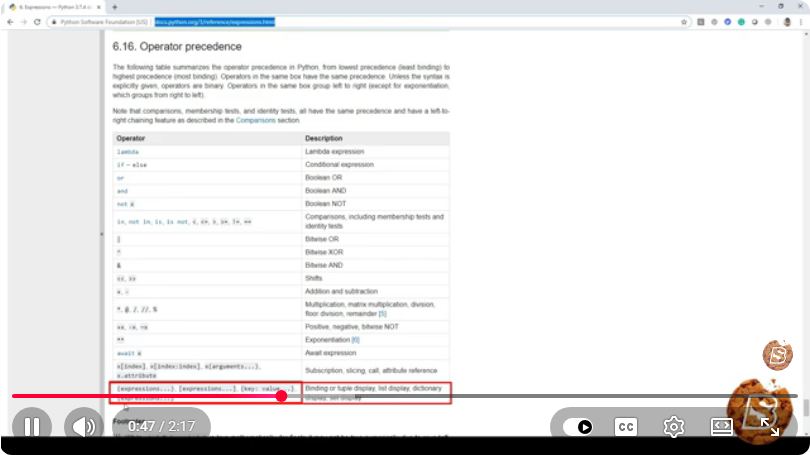
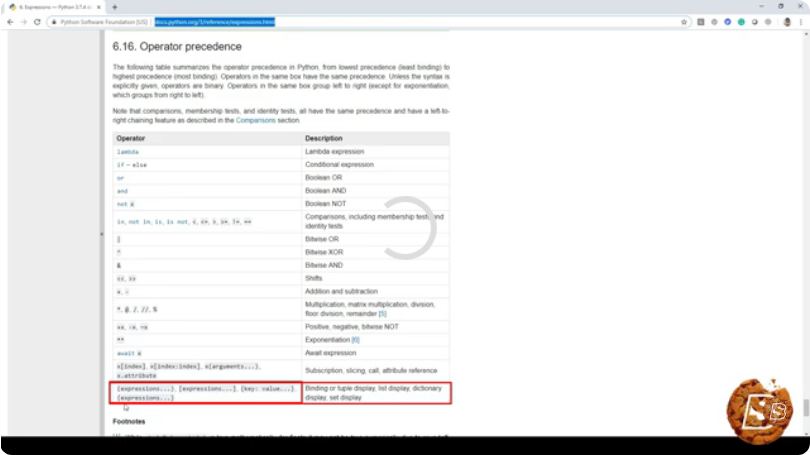
Operator precedence determines the order in which different operators are evaluated in an expression. In Python, some operators take precedence over others, meaning they are evaluated first. Understanding this hierarchy is essential for writing correct and efficient code.
Basic Operator Precedence Rules
Python's operator precedence follows a specific hierarchy, which can be summarized as follows (from highest to lowest):
- Parentheses
()- Expressions within parentheses are evaluated first. - Exponentiation
**- This operator has the next highest precedence. - Unary plus and minus
+x,-x- These operators handle the sign of a number. - Multiplication
*, Division/, Floor Division//, and Modulus%- These operators are evaluated next. - Addition
+and Subtraction-- These are evaluated after the multiplication and division operators. - Bitwise Shift Operators
<<,>>- These operators follow addition and subtraction. - Bitwise AND
&- This operator has lower precedence than shifts. - Bitwise XOR
^- Evaluated after bitwise AND. - Bitwise OR
|- The lowest in this list of operators before comparison. - Comparison Operators
==,!=,>,<,>=,<=- These are evaluated after bitwise operations. - Identity and Membership Operators
is,is not,in,not in- These follow comparison operators. - Logical NOT
not- This operator has higher precedence than logical AND and OR. - Logical AND
and- Evaluated before logical OR. - Logical OR
or- The last in the order of precedence.
Example of Operator Precedence in Action
To illustrate how operator precedence works, consider the following Python expression:
result = 3 + 5 * 2 ** 2 - 1
Step-by-Step Breakdown
- Exponentiation: The first operation is
2 ** 2, which equals4. - Multiplication: Next, we perform
5 * 4, resulting in20. - Addition: Then, we evaluate
3 + 20, which equals23. - Subtraction: Finally, we subtract
1, yielding22.
The final value of result is 22.
Using Parentheses to Override Precedence
Sometimes, you may want to change the order of operations to suit your needs. You can achieve this by using parentheses. For example:
result = (3 + 5) * 2 ** 2 - 1
Breakdown of the Modified Expression
- Parentheses: The expression inside the parentheses
3 + 5is evaluated first, giving8. - Exponentiation: Next, we calculate
2 ** 2, which equals4. - Multiplication: Then, we perform
8 * 4, resulting in32. - Subtraction: Finally, we subtract
1, yielding31.
In this case, the final value of result is 31, demonstrating how parentheses can alter the outcome by changing the order of operations.
Summary
Understanding operator precedence is crucial for writing correct expressions in Python. By knowing which operators take precedence over others, you can predict the outcome of your calculations and avoid common pitfalls. Remember, when in doubt, use parentheses to make your intentions clear and ensure your code behaves as expected.
For further exploration, consider experimenting with different expressions in your Python environment to see how changing operator precedence affects the results. Happy coding!
Connect with SkillBakery Studios
Explore more tutorials, tools, and resources:
Posted by SkillBakery Studios


 Hello, my name is Jack Sparrow. I'm a 50 year old self-employed Pirate from the Caribbean.
No comments:
Post a Comment