
NextJs - API Routes Middleware

Understanding Next.js API Routes Middleware in 3 Minutes
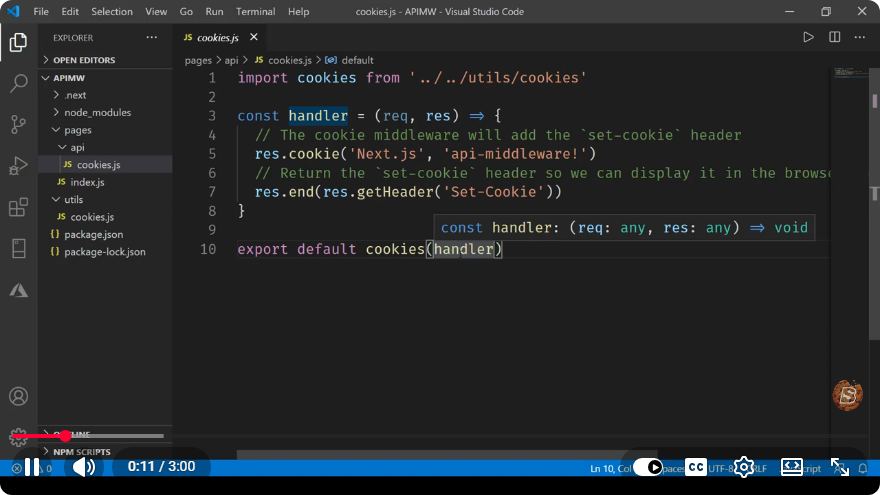
In the world of web development, Next.js stands out as a powerful framework for building React applications. One of its key features is API routes, which allow developers to create serverless functions directly within their Next.js applications. In this blog post, we will explore how to effectively use middleware with API routes in Next.js, inspired by the YouTube video titled "NextJs - API Routes Middleware 3 minutes, 1 second."
What Are API Routes?
API routes in Next.js enable you to create RESTful endpoints easily. These endpoints can be used for handling form submissions, fetching data, or even integrating with third-party services. The beauty of API routes is their serverless nature, meaning they run on the server-side and can be deployed on platforms like Vercel without additional server configuration.
Creating a Simple API Route
To create an API route in Next.js, you can follow these simple steps:
Create a New File: Inside your Next.js project, navigate to the
pages/apidirectory. Create a new file, e.g.,hello.js.Add the API Route Code: Here’s a simple example of an API route:
// pages/api/hello.js
export default function handler(req, res) {
    res.status(200).json({ message: 'Hello, World!' });
}
In this example, when you navigate to /api/hello, the server responds with a JSON object containing a greeting message.
Introduction to Middleware
Middleware in Next.js can be thought of as a function that sits between the request and response cycle. It allows you to execute code, modify the request and response objects, end the request-response cycle, and call the next middleware function in the stack.
Why Use Middleware?
Middleware is beneficial for various reasons:
- Authentication: Check if a user is authenticated before allowing access to certain API routes.
- Logging: Log requests for monitoring and debugging purposes.
- Data Validation: Validate incoming data before processing it in your route handler.
Implementing Middleware with API Routes
Next.js allows you to enhance your API routes with middleware by wrapping your API route handlers. Let’s create a simple logging middleware as an example.
Step 1: Create the Middleware
Create a new middleware function in a separate file, e.g., middleware.js, in your project root:
// middleware.js
export function logger(req, res, next) {
    console.log(`Request Method: ${req.method}`);
    console.log(`Request URL: ${req.url}`);
    next();
}
Step 2: Use Middleware in Your API Route
Now, we can use the logger middleware in our hello.js API route. Here’s how you can do that:
// pages/api/hello.js
import { logger } from '../../middleware';

const handler = (req, res) => {
    res.status(200).json({ message: 'Hello, World!' });
};

// Wrap the handler with the middleware
export default function apiRoute(req, res) {
    logger(req, res, () => handler(req, res));
}
In this example, the logger middleware logs the request method and URL to the console before calling the main handler function.
Conclusion
Middleware in Next.js API routes offers a flexible way to enhance your server-side logic. By using middleware, you can handle tasks like authentication, logging, and data validation seamlessly. This feature not only makes your code cleaner but also adheres to the DRY (Don't Repeat Yourself) principle.
With the knowledge gained from this tutorial, you can now implement middleware in your Next.js API routes, making your applications more robust and maintainable.
For further exploration, consider checking out the Next.js documentation for more advanced use cases and best practices. Happy coding!
Connect with SkillBakery Studios
Explore more tutorials, tools, and resources:
Posted by SkillBakery Studios


 Hello, my name is Jack Sparrow. I'm a 50 year old self-employed Pirate from the Caribbean.
No comments:
Post a Comment