
Lecture-15: Full Intelligent System Design Blueprint
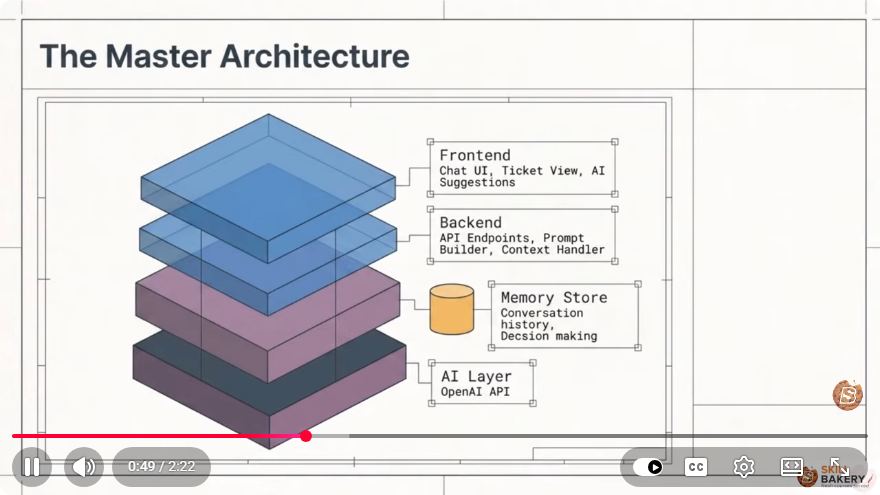
Building an Intelligent System Design Blueprint with Generative AI
In today's rapidly evolving technological landscape, the integration of artificial intelligence (AI) into business processes has become paramount. The final lecture of our series, "Full Intelligent System Design Blueprint," focuses on synthesizing various components of AI into a cohesive, enterprise-ready solution. In this blog post, we will explore the key concepts covered in the lecture, including prompt engineering, AI agents, conversational memory, Retrieval-Augmented Generation (RAG), ticketing integration, debugging, knowledge management, and scalable architecture.
Understanding the Components of Intelligent System Design
To create a robust Intelligent System Design Blueprint, we need to understand how each component works and interacts with one another. Below, we delve into each of these elements.
1. Prompt Engineering
Prompt engineering is the art of crafting inputs that elicit the best responses from AI models. When designing prompts, consider the following:
# Sample Python code for crafting a prompt
def create_prompt(user_input):
    base_prompt = "Based on the following input, provide a detailed response: "
    return f"{base_prompt}{user_input}"

user_input = "What are the benefits of generative AI in business?"
prompt = create_prompt(user_input)
print(prompt)  # Output: Based on the following input, provide a detailed response: What are the benefits of generative AI in business?
2. AI Agents
AI agents are autonomous systems that use AI to perform specific tasks. In an enterprise context, AI agents can handle customer inquiries, automate mundane tasks, and provide insights from data analysis.
3. Conversational Memory
Conversational memory allows AI systems to retain context over multiple interactions. This is crucial for creating personalized experiences. Implementing conversational memory requires careful management of state and context.
4. Retrieval-Augmented Generation (RAG)
RAG combines the strengths of generative models and retrieval-based systems. It retrieves relevant information to enhance the responses generated by AI. This mechanism improves the accuracy and relevance of the outputs.
5. Ticketing Integration
Integrating a ticketing system allows AI to manage customer support inquiries efficiently. By automating ticket creation and tracking, businesses can streamline their operations and improve response times.
6. Debugging
Debugging is an essential step in developing any AI system. It involves identifying and fixing errors in the system. Effective debugging techniques can include logging, unit tests, and monitoring system performance.
7. Knowledge Management
Knowledge management ensures that information is accurately captured, organized, and retrieved. This is critical for maintaining an up-to-date knowledge base that the AI system can draw from.
8. Scalable Architecture
A scalable architecture ensures that the AI system can handle increased loads as demand grows. This involves designing a system that can expand vertically (adding more resources) or horizontally (adding more instances).
Creating the Intelligent System Design Blueprint
To build an enterprise-ready AI solution, integrate the above components into a coherent blueprint. Here’s a simplified structure to guide your design:
Step 1: Define Objectives
Begin by clearly defining the objectives of your AI system. What problems are you aiming to solve? How will success be measured?
Step 2: Select the Right Tools
Choose appropriate tools and frameworks for each component. For instance, consider using TensorFlow or PyTorch for machine learning models, and frameworks like FastAPI or Flask for deploying your AI agents.
Step 3: Design the Interaction Flow
Map out how users will interact with the AI system. This includes defining the conversation flow, integrating ticketing systems, and determining how the AI will leverage retrieval-augmented generation.
Step 4: Implement Conversational Memory
Design the architecture for conversational memory, ensuring that the system can retain context across sessions.
Step 5: Develop and Test
Begin coding based on your design. Implement unit tests and debug as you go to ensure functionality.
Step 6: Evaluate and Iterate
Once the system is in place, evaluate its performance against your objectives. Gather user feedback and iterate to improve the system continuously.
Conclusion
The journey to create a full Intelligent System Design Blueprint involves a deep understanding of various components and their interactions. By leveraging generative AI, businesses can build powerful solutions that enhance efficiency and improve user experience. As you embark on this path, remember that the key to success lies in careful planning, execution, and ongoing refinement.
For those interested in diving deeper, consider reviewing the full lecture on YouTube for practical examples and further insights into each component.
Watch the full lecture here: Full Intelligent System Design Blueprint
With the right approach, the possibilities for integrating AI into your business are limitless!
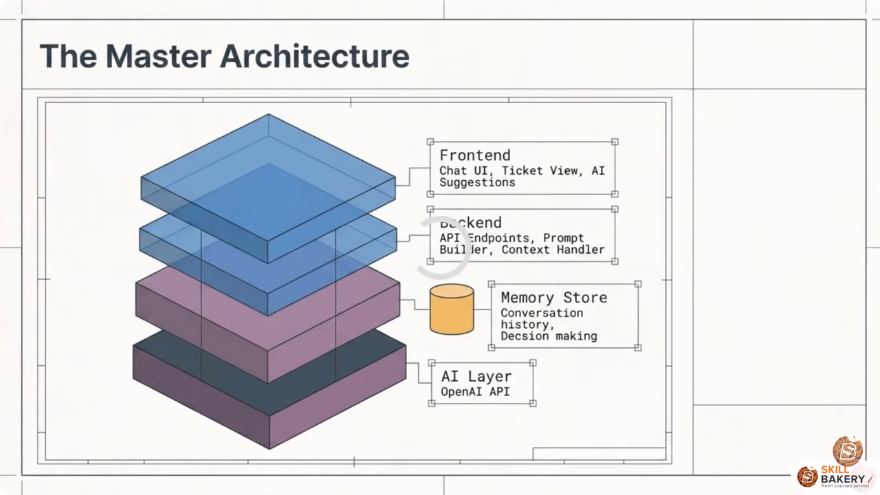
Connect with SkillBakery Studios
Explore more tutorials, tools, and resources:
Posted by SkillBakery Studios


 Hello, my name is Jack Sparrow. I'm a 50 year old self-employed Pirate from the Caribbean.
No comments:
Post a Comment